- 01. The technology that actually drives engagement
- 02. LED walls: when they're worth it, when they're not
- 03. AR, VR, and immersive demos
- 04. AI at the booth: useful and theater
- 05. Touchscreens, kiosks, and self-serve content
- 06. The 'don't bother' list
Trade show technology vendors will sell you anything. AR glasses, AI-powered concierges, gesture-controlled holograms, oversized LED walls — all real, all available, all very expensive. The honest question isn't what's possible; it's what's worth paying for. Here's a working filter for booth technology, from the high-leverage investments to the things you should let your competitor pay for first.
The technology that actually drives engagement
After watching hundreds of booths, the technology that consistently drives measurable engagement is unglamorous: a great demo on a normal-sized screen, run by a human who knows the product. That's the baseline, and most booths don't even nail it. Before adding any new tech layer, make sure the demo experience is genuinely good — fast, clear, and visibly relevant to the visitor's job.
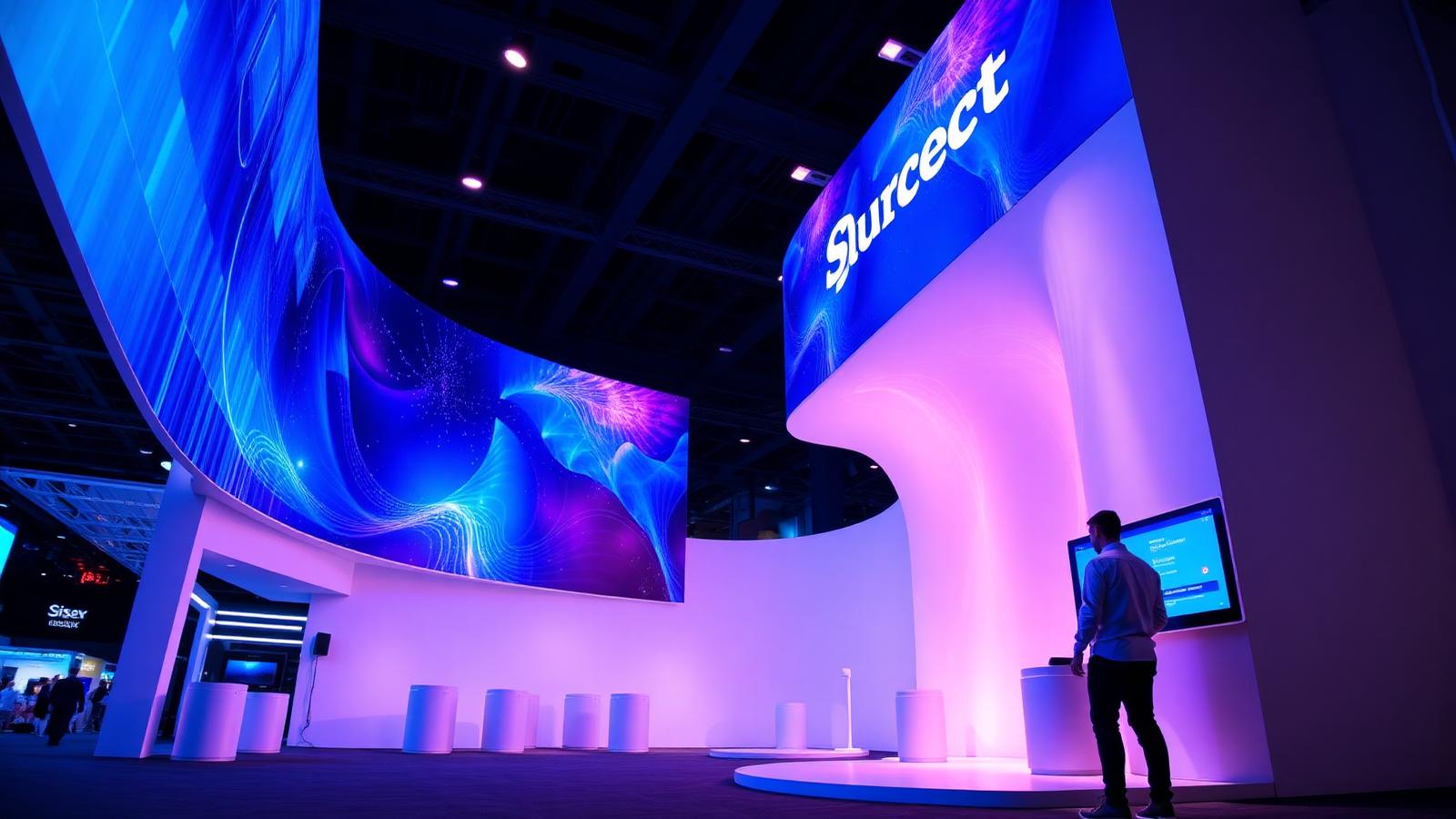
Above that baseline, the technology with the best ROI tends to be: a large but not enormous LED wall (8–12 ft) for ambient brand presence, one well-designed touchscreen that lets visitors self-explore, and a clean lead capture system that syncs to CRM in real time. That's it. Everything else is optional.
LED walls: when they're worth it, when they're not
An LED wall replaces a printed graphic with a dynamic one. The cost difference is significant — renting an LED wall for a single show typically costs many times what a printed backwall does, with the exact spread depending on pixel pitch, panel size, the rental market in your show city, and install labor. Get quotes for both before deciding.
An LED wall earns its keep when you have product demos that genuinely play better as motion (3D product spins, simulation footage, customer interviews). It doesn't when you just have a logo loop and some animated brand video. If your LED content is essentially a moving billboard, you're paying a large multiple for marginally better aesthetics. Save the money for the demo or the staff.
AR, VR, and immersive demos
Immersive tech (AR glasses, VR headsets, mixed reality) earns its keep when your product is something a visitor literally cannot see in person — large industrial equipment, architecture, surgical procedures, software that lives in 3D space. For these categories, an immersive demo can be the entire reason someone remembers your booth.
It does not earn its keep as a 'wow factor' for products that demo perfectly well on a screen. Putting a VR headset on someone to show them a SaaS dashboard is theater, and the line of people waiting for the headset is keeping you from talking to better-qualified prospects who walked past.
AI at the booth: useful and theater
AI tools have arrived at the booth in two flavors. The useful ones: real-time lead enrichment (look up the company while the conversation is happening), AI-powered meeting summaries (transcribe and summarize the conversation for the rep's CRM notes), and lead scoring that prioritizes follow-up after the show.
The theater: AI-powered chatbots on a kiosk that visitors interact with instead of your humans. Visitors didn't fly to a trade show to talk to a chatbot. The booth is your one chance for face-to-face; outsourcing it to AI is a use of technology that misses the point of the medium.
Tell us about your event, budget, and timeline. We'll line up vetted booth builders that fit — usually within 48 hours, no commitment.
Get matched with buildersTouchscreens, kiosks, and self-serve content
A well-designed touchscreen lets a visitor self-explore product details while a rep is busy with someone else, captures their interaction data, and (with a quick QR scan) emails them a personalized takeaway. This is genuinely high-ROI. The trick is the design: most kiosks are essentially a website on a vertical screen, which is no better than handing them a brochure.
What makes a kiosk work: short content (3–5 screens max per flow), clear paths organized by visitor type, and a meaningful 'send this to me' moment at the end that captures contact info as a natural part of the interaction.
The 'don't bother' list
A few categories of booth tech that consistently underperform their cost:
- Photobooths and step-and-repeat selfie stations — fun, no pipeline impact
- Spinning prize wheels — attracts the wrong audience (people who collect SWAG, not buyers)
- Holographic projection — looks impressive in marketing material, looks dim and small in a real booth
- Branded VR games unrelated to the product — they're just games, not lead generators
- Charging stations as the booth's main draw — they're table stakes now, not a reason to stop
None of these are categorically bad. They're bad as your headline investment. Spend the budget on the demo, the staff, and the follow-up first.
- A great human-led demo on a normal screen beats most fancy tech
- LED walls are worth it for dynamic product content, not animated logos
- Immersive tech earns its place when the product can't be seen any other way
- Use AI for lead enrichment and CRM notes, not as a chatbot replacing humans
- Skip prize wheels, holograms, and selfie stations as your headline investment
Download the Exhibit Bridge Booth Buyer's Guide
Budgets, timelines, vendor red flags, and the exact questions to ask before signing a booth builder contract.
Ready to find the right booth builder?
Skip the cold-calling. Tell us about your show, your booth size, and your budget — we'll send a short list of builders worth your time.
Part of the Exhibit Bridge editorial team — ex-exhibitors, marketers, and builders writing the guides we wish we'd had when we were on the show floor.
Plan around your show, city, and industry
Use these directories to pressure-test the guide against your specific show, venue, and vertical.
Keep reading
Five 2026 design trends that are worth adopting — and three trends that don't justify the cost.
AV is where booth budgets quietly explode. Here's what's worth it — and what isn't.
Exhibiting outside your home country adds 6 layers of complexity. Here's the checklist.