- 01. What drayage actually covers
- 02. How drayage is priced (CWT, minimums, surcharges)
- 03. Crated vs. loose vs. small package
- 04. Practical strategies that cut your drayage bill
- 05. Estimating drayage before you sign anything
Drayage is the trade show industry's most reliably surprising line item. First-time exhibitors see a four-figure bill for moving their crate from the loading dock to the booth and assume it's a mistake. It isn't. Drayage is a structural cost of every show at every major convention center, and the exact number varies a lot by city, venue, weight, and how your freight arrives — but with planning, you can cut it meaningfully without changing what you ship. Here's how it actually works, and the practical levers exhibitors miss.
What drayage actually covers
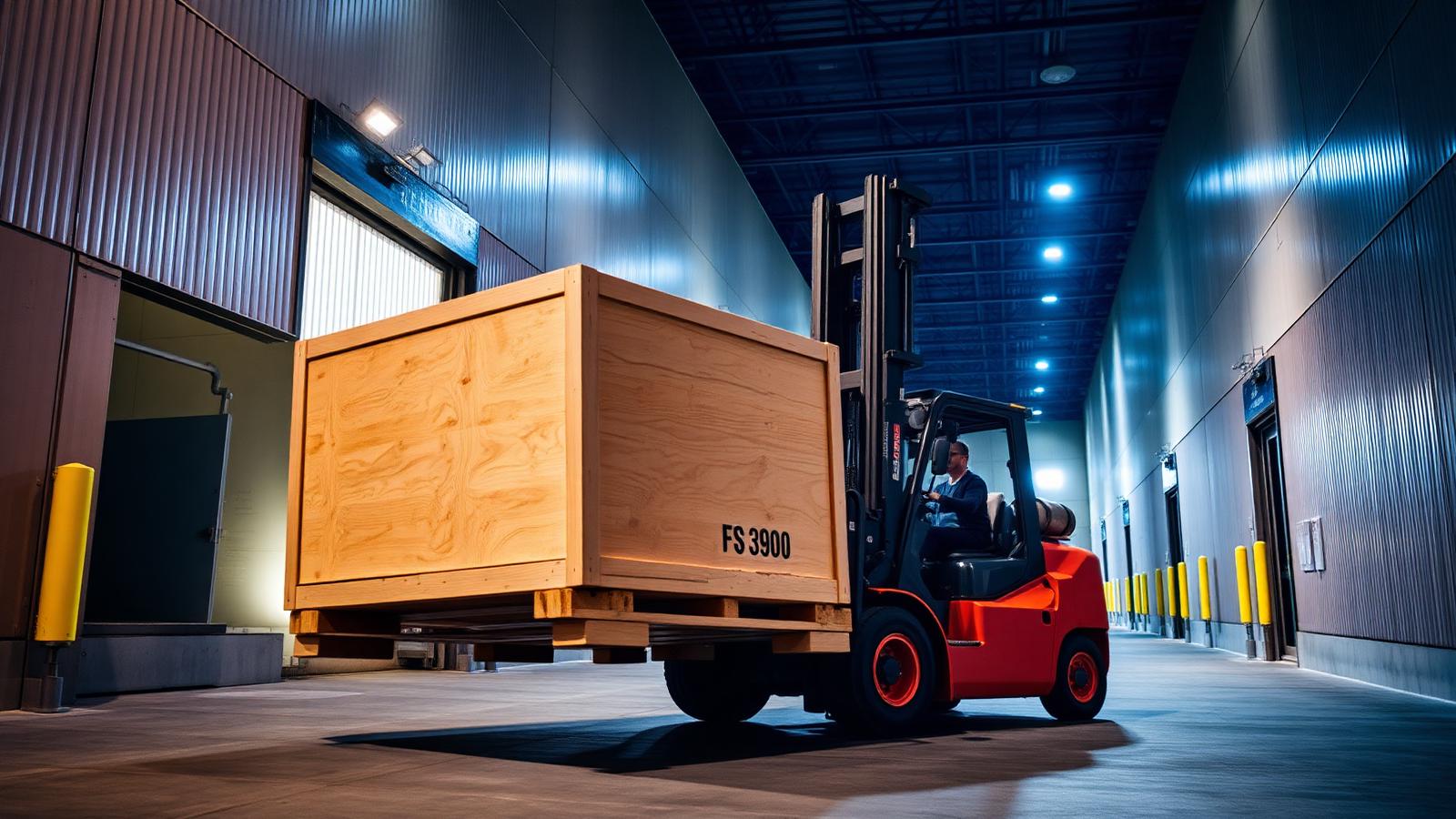
Drayage is the service of moving your freight from the convention center loading dock to your booth space, storing your empty crate during the show, and bringing the crate back to the booth at dismantle. It's performed by the show's official contractor — usually GES, Freeman, or in smaller markets a regional vendor — under an exclusive contract with the venue.
Critically, drayage is not the same as shipping. Shipping is what your carrier charges to get the crate to the convention center. Drayage starts the moment your shipment arrives at the dock. You pay for both, separately, and they're billed by different vendors.
How drayage is priced (CWT, minimums, surcharges)
Drayage is billed per hundredweight (CWT) — every 100 pounds of freight. The base rate varies by city, with major union markets like Chicago, NYC, San Francisco, and Las Vegas typically at the higher end and smaller regional shows lower. There's almost always a minimum (commonly around 200 pounds), even if your crate is much lighter.
Then come the surcharges. Off-target arrivals (showing up outside your assigned move-in window), overtime arrivals (after hours or weekends), and loose pieces vs. crated freight all add to the total. A small shipment of loose boxes can end up costing more than a heavier shipment in a single crate.
- Base CWT rate: varies by city and venue — ask the show contractor for the current rate sheet
- Minimum charge: usually a couple hundred pounds even on small shipments
- Off-target surcharge: applied when you miss your assigned move-in window
- Overtime surcharge: applied for after-hours or weekend deliveries
- Loose/uncrated penalty: priced higher per pound than well-crated freight
Crated vs. loose vs. small package
Drayage rates depend heavily on how your freight arrives. The cheapest is well-crated freight delivered on a single bill of lading during your assigned move-in window. The most expensive (per pound) is loose pieces or small packages delivered via FedEx/UPS to the show floor.
The exception is genuinely small shipments. If you can fit your booth into one or two boxes under 50 pounds total, sending them via UPS to your hotel and walking them in yourself bypasses drayage entirely. This works for table-top displays and pop-up booths, not for anything 10x10 or larger.
Tell us about your event, budget, and timeline. We'll line up vetted booth builders that fit — usually within 48 hours, no commitment.
Get matched with buildersPractical strategies that cut your drayage bill
A few moves consistently reduce drayage cost without changing your booth:
- Consolidate to a single crate — multiple smaller crates each hit the 200-lb minimum
- Hit your assigned move-in window — off-target charges are the biggest avoidable surcharge
- Use crates, not loose pieces — even cardboard boxes count as loose if not strapped to a pallet
- Pre-print and apply correct shipping labels (some shows charge a relabeling fee)
- Ship to the advance warehouse, not direct to show — usually cheaper and gives you scheduling buffer
- For small shipments, consider hand-carrying (POV) — but check the venue's POV rules first
The single biggest win is the advance warehouse. Most shows offer this option: ship to a holding warehouse 2–3 weeks before the show, and the contractor delivers to your booth on your assigned day. Costs slightly more per pound but eliminates off-target risk and arrival surcharges, often netting cheaper than direct ship.
Estimating drayage before you sign anything
You can ballpark your drayage bill before booking the show using a simple formula: shipment weight (in pounds) ÷ 100 × the show's published CWT rate × 2 (round trip). Pull the actual rate from the exhibitor manual for your specific show, then add a buffer of roughly 15% for surcharges. The result will get you close enough to budget against — your builder can refine it once they've seen comparable shows.
Your builder should be able to give you the crate weight in writing as part of the quote. If they can't, that's a red flag — it means they don't track this for past projects, and you'll be guessing on every other logistics number too.
- Drayage is separate from shipping — both are billed, by different vendors
- Hit your move-in window: off-target charges are the biggest avoidable surcharge
- One crate beats multiple boxes — minimums are 200 lb regardless of actual weight
- Advance warehouse usually nets cheaper than direct-to-show shipping
- Estimate drayage before you sign: weight ÷ 100 × the show's CWT rate × 2
Download the Exhibit Bridge Booth Buyer's Guide
Budgets, timelines, vendor red flags, and the exact questions to ask before signing a booth builder contract.
Ready to find the right booth builder?
Skip the cold-calling. Tell us about your show, your booth size, and your budget — we'll send a short list of builders worth your time.
Part of the Exhibit Bridge editorial team — ex-exhibitors, marketers, and builders writing the guides we wish we'd had when we were on the show floor.
Zoom out to the full playbook
This article is part of a deeper hub — the pillar page collects every related guide on the topic.
Plan around your show, city, and industry
Use these directories to pressure-test the guide against your specific show, venue, and vertical.
Keep reading
You don't need a 30×30 island and a coffee bar to win a show. Here's how scrappy exhibitors out-perform booths that cost 10x more.
A size-by-size breakdown of real booth costs — rental and custom — plus the line items most quotes quietly leave out.
Drayage, rigging, electrical, internet, lead retrieval, and the other line items that quietly add 30–50% to a booth quote.