- 01. Where booth emissions actually come from
- 02. What actually moves the needle
- 03. What's mostly greenwashing
- 04. Materials that hold up to scrutiny
- 05. Working with builders on sustainability
- 06. Cost reality
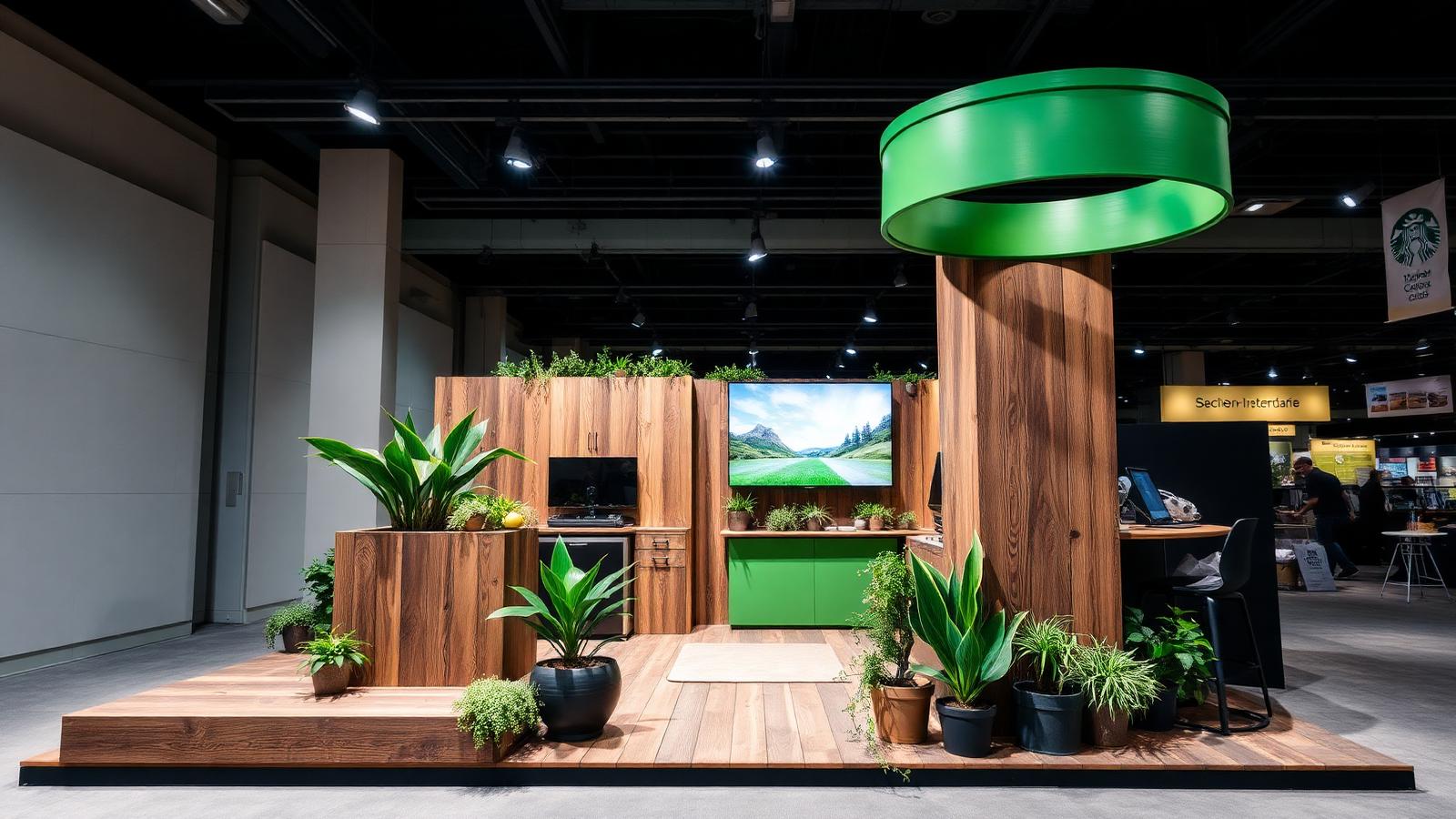
Sustainability requirements are showing up in more RFPs every year — sometimes from your own ESG team, sometimes from event organizers (Informa, RX, and Messe Frankfurt all have published exhibitor sustainability guidelines now). The problem: most 'eco' booth marketing is fluff. Here's how to build a booth that's genuinely lower-impact and can survive a procurement audit.
Where booth emissions actually come from
Studies from MeetGreen and the Events Industry Council put booth-related emissions in roughly this order: freight and travel (~50–60%), single-use materials and disposal (~20–25%), energy on-site (~10–15%), and food/giveaways (~5–10%). That tells you where the leverage is — and it's not in switching your tote bags to bamboo.
If you take one thing from this article: building locally and reusing structures matters far more than the material your countertop is made from.
What actually moves the needle
- Modular reusable systems — A booth designed to be reconfigured across 5+ shows beats any 'recycled material' single-use build, even one made of bamboo.
- Local builds over shipped builds — Sourcing within 250 miles of the venue cuts freight emissions by 60–80% vs. shipping cross-country.
- Rental graphics and rental furniture — Especially for one-off shows. Disposal of custom builds is the dirty secret of the industry.
- LED lighting — Uses 60–80% less power than halogen and reduces your show power order.
- Digital lead capture — A single tablet replaces hundreds of printed brochures most attendees throw out by the airport.
What's mostly greenwashing
Carbon-neutral certifications based on offsets without a real reduction plan. Bamboo or 'eco' single-use builds that still get landfilled after one show. 'Recyclable' carpet — technically true, almost never actually recycled because of contamination. Branded reusable water bottles given to people who already have three. None of these are bad, but don't let them substitute for the structural decisions above.
Materials that hold up to scrutiny
- FSC-certified plywood and engineered wood for structures
- Recycled aluminum extrusions (most modular systems already use this)
- PVC-free fabric graphics (polyester tension fabric is the standard sustainable option)
- Water-based, low-VOC finishes
- Recycled-content carpet tile (and reuse it across shows — don't dispose)
Tell us about your event, budget, and timeline. We'll line up vetted booth builders that fit — usually within 48 hours, no commitment.
Get matched with buildersWorking with builders on sustainability
Ask any builder for: (1) a written end-of-life plan for the booth (reuse / store / recycle / landfill, with %), (2) freight origin and method, (3) materials breakdown with FSC or recycled-content certificates where applicable, and (4) energy usage estimate for show power.
The good builders will have answers ready. The ones who say 'everything is sustainable, don't worry about it' are the ones to be careful with. If your company has an ESG report, the booth team needs evidence — not vibes.
Cost reality
A genuinely sustainable booth is usually a bit more expensive in year one (better materials, smarter engineering for reuse) but meaningfully cheaper over 3 years because you're not rebuilding from scratch each time. The economics work; the upfront conversation with finance is the harder part. Get quotes that itemize reuse vs. rebuild so the multi-year math is visible.
Some venues now offer reduced rates for booths meeting sustainability criteria, and a few major shows (e.g. CES, IFA, Web Summit) publicly highlight sustainable exhibitors — worth asking your show organizer about.
- Freight + reuse decisions matter far more than which 'eco' material you pick
- Build locally and reuse modular structures across shows
- Skip greenwashing — focus on FSC wood, PVC-free graphics, LED, digital capture
- Ask builders for end-of-life plans and materials certificates in writing
- Sustainable booths cost a bit more upfront but typically pay back over a few shows of reuse
Download the Exhibit Bridge Booth Buyer's Guide
Budgets, timelines, vendor red flags, and the exact questions to ask before signing a booth builder contract.
Ready to find the right booth builder?
Skip the cold-calling. Tell us about your show, your booth size, and your budget — we'll send a short list of builders worth your time.
Part of the Exhibit Bridge editorial team — ex-exhibitors, marketers, and builders writing the guides we wish we'd had when we were on the show floor.
Zoom out to the full playbook
This article is part of a deeper hub — the pillar page collects every related guide on the topic.
Plan around your show, city, and industry
Use these directories to pressure-test the guide against your specific show, venue, and vertical.
Keep reading
Lighting is the single highest-ROI upgrade you can make to a booth. Here's how to plan it, what to spec, and the mistakes that wash out your brand.
Six graphic-design rules that make modular booths look custom — and the mistakes that make them look like a generic kit.
The shipping method choice that quietly determines whether your booth makes it to the show floor on time.